How Fiber Internet Supports a More Sustainable Future
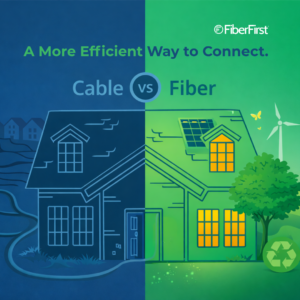
Fiber internet supports a more sustainable future. As our lives become increasingly digital, the way we connect matters more than ever, not just for speed and reliability, but for the long-term impact on our environment. Fiber-optic networks use less energy, deliver data more efficiently, and can use up to 70% less energy per gigabit than copper networks. Widely recognized as one of the most energy-efficient broadband technologies, fiber supports growing connectivity needs while helping reduce environmental impact.
Fiber internet stands out as one of the most energy-efficient and sustainable ways to stay connected by helping communities reduce their environmental footprint while enjoying a faster, more reliable online experience.
Built for Efficiency from the Ground Up
Unlike traditional copper-based networks, fiber-optic technology uses light signals to transmit data. This approach is not only faster, it’s significantly more energy-efficient. Fiber networks require less electricity to operate, resulting in lower overall power consumption across the system.
In fact, studies have shown that fiber broadband can use up to 60% less energy than legacy cable or DSL networks. That’s a meaningful reduction, especially as global data usage continues to climb year after year.
Fewer Resources, Longer Lifespan
Sustainability is about energy use AND durability. Fiber-optic cables are designed to last decades, with minimal degradation over time. They’re less susceptible to environmental wear, temperature fluctuations, and electromagnetic interference, which means fewer repairs, replacements, and material waste.
This long lifespan translates into a smaller environmental impact over time. Simply put, fiber is infrastructure built for the future; it’s not something that needs constant rebuilding.
Supporting Greener Digital Habits
A more efficient network also empowers users to make more sustainable choices in their everyday lives. Reliable high-speed fiber makes it easier to:
– Work remotely and reduce commuting emissions
– Access telehealth services without travel
– Stream and collaborate efficiently without excess energy waste
– Power smart home technologies that optimize energy use
By enabling these digital habits, fiber internet plays a quiet but important role in reducing our collective environmental footprint.
Lower Heat, Lower Impact
Another often-overlooked benefit of fiber networks is reduced heat generation. Traditional copper systems require more electrical current, which produces more heat which requires more cooling. Fiber networks operate with far less heat output, reducing the need for energy-intensive cooling systems in data centers and network hubs. Less heat means less energy wasted, contributing to a more efficient and environmentally friendly ecosystem overall.
Investing in a Sustainable Digital Future
As communities look ahead, the infrastructure choices we make today will shape the environmental impact of tomorrow. Fiber internet offers a forward-thinking solution and one that aligns high performance with responsible energy use.
At FiberFirst, we’re celebrating Earth Day with better connectivity that’s better for the planet! By investing in fiber-optic networks, we’re not just delivering faster internet. We’re helping build a more sustainable digital foundation for generations to come.